Aqua Rush Academy Swim School

Online swim coaching

Fix the problem. Not another year of lessons.

Safe, confident swimmers, fast!

We fix almost every swim problem and give you the confidence to do it yourself. Send us a video and within 24 hours you get at least three steps you can take right now. Imagine having it fixed this weekend.

$47, one time. No subscription, no package of ten lessons.

Common problems Fear of the water Will not leave the shallow end Panic when they cannot touch Swimming with the head up Cannot get back to the wall No way to rest

Why swimmers stall

Three years of lessons is not a plan. It is a subscription.

Group lessons are built to move a class forward, not to diagnose one swimmer. So a problem that takes ten minutes to name gets rehearsed 300 times instead. The swimmer gets stronger at doing the wrong thing.

  1. 01
    Nobody is watching one swimmer

    An instructor with six kids in a lane is managing a lane. Problems that only show up on the third length never get seen at all.

  2. 02
    Effort gets coached, not cause

    "Kick harder" is the standard answer to sinking legs. It is almost never the cause, and it makes the swimmer more tired and no faster.

  3. 03
    Nothing is measured

    Without a stroke count or a before-and-after video, nobody can tell whether the last eight weeks changed anything. So you sign up for eight more.

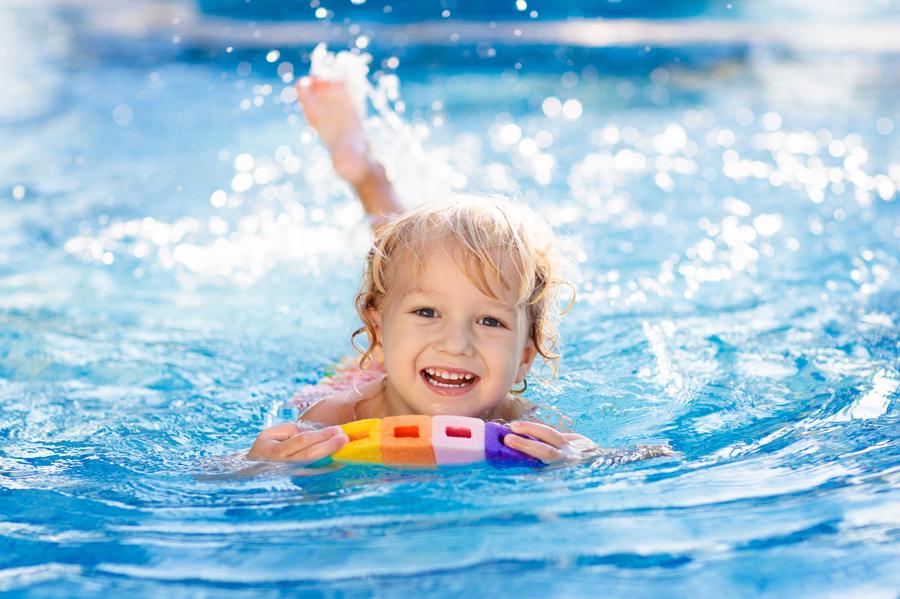
A young swimmer moving across a pool
Comfortable in the water is what matters!

The short list

Common problems

Almost every swimmer we see arrives with one of a handful of problems, and none of them are about perfect strokes. Here is what each one looks like from the side of the pool, and what is actually behind it. What to do about it is what you send us the video for.

The problem What you see from the side of the pool What is actually causing it
Fear of the waterWill not get in Cries at the steps, clings to you, or will only sit on the edge with their feet in. Nothing about the water is familiar yet. Every part of it is unknown, so every part of it is a threat.
Will not leave the shallow endStops where they can stand Swims happily where their feet touch, then freezes the moment the bottom drops away. Nobody has taught them what to do when they run out of air away from the wall, so deep water reads as a trap with no way back.
PanicThe moment it goes wrong Head tipped back, arms slapping the surface, no forward movement, and a face that has stopped thinking. No practised response. A swimmer who has never rehearsed a recovery will default to panic every single time.
Swimming with the head upOut of breath in one length Chin up, eyes forward, body upright in the water, exhausted after a few strokes. They are holding their breath and lifting to see. The legs sink, the body stands up, and every stroke costs twice what it should.
Cannot get back to the wallNeeds fetching every time Swims out happily, then needs an adult to bring them back in. They can swim, but nobody has taught them to turn, pick a target and finish at an edge under their own steam.
No way to restOne speed until they stop Full effort until they run out of air or energy, with nothing in between. Floating and treading were skipped, or taught once and never used, so there is no gear between swimming and sinking.

Recognise your swimmer? Naming the problem is the easy half. Knowing what to do about it, in what order, and what to say while it is happening, is the part we do.

Not on the list? Send the video anyway. If we cannot name a problem, we will say so and refund the $47.

How it works

Four steps, and no drive to a pool that is not yours

The whole loop runs on a phone and the pool you already have access to.

STEP 01

Film them, or just call

Film them in the water, or pick up the phone and call. If you are filming, one length from the side of the pool and one head-on from the end, phone held sideways. See where to stand.

STEP 02

Get the diagnosis

Inside 24 hours you get at least three things to work on: the problem named, the cause explained, and the words to use from the side of the pool. It comes back in whatever form suits the problem, a written plan, a video, or a call.

STEP 03

Work the fix

Some fixes are immediate. Some take a bit of work. Be patient, let them figure it out, and move at their pace rather than yours.

STEP 04

Send the recheck

Show us the progress in a new video. We will correct any new problems or give feedback on anything that is not working. Rechecks come with the four‑week add‑on.

A young swimmer practising with a float in the pool

What you need

No underwater housing, no special goggles, no gear you have to buy.

  • A phone
  • Any pool
  • A safe person in the water

Who is behind this

Thirty years of teaching people to be safe in the water

I spent my childhood living in a swimming pool. Summers in the backyard pool are where I fell in love with the water.

In 1996 I was one of the founding members of ABC Swim School, three friends from Notre Dame High School with a love of the water and a strong entrepreneurial streak. Later I was director of swim instruction for the Moorpark Aquatics Club and ran a private in-home swim school called Ready2Swim. I have taught mommy-and-me classes, kids, grandparents who never learned, Navy enlisted members with their sights on becoming SEALs, and teenagers too embarrassed to get in the water with their friends.

Then my own kids arrived. My son was reserved in the water, my daughter was a cannonball, and between them they taught me more than any number of lessons ever did. What I realized as a dad is that I did not care whether they swam a perfect stroke. I cared that they enjoyed the water and that they were safe.

That changed how I teach. Safe, confident swimmers having fun, as fast as possible. I routinely had kids swimming within hours, or over a single weekend, with the skills to fix problems when problems came up. Traditional programs work, but their focus is stroke development, and stroke development turns easily into a treadmill of lessons that never ends.

After 2020 I realized I could help more families remotely than I ever could one at a time. That is why Aqua Rush Academy exists.

The rest of the story

In 2003 I joined the LAPD. An on-duty traffic accident ended that career, and I honorably retired from the department in 2008. I went back to the water.

I am a master at breaking down the competitive strokes, front crawl, backstroke, breaststroke and butterfly, and I teach the non-competitive ones too, from the beginner stroke and side stroke and elementary backstroke all the way up to the combat swimmer stroke. I mention that only so you know the form is available if your swimmer wants it later. It is just not where I start.

Let me ask you something. When was the last time you watched kids in a pool swimming laps? You did not. They splash each other, play with toys, shoot each other with water guns, and spend most of their time underwater or swimming with their heads up, having fun. That is the water they actually live in, so that is the water I teach them to be safe in.

In 2020 the pool became the only place anyone could go, and private in-home swim lessons were not on the essential worker list. So I started helping parents teach their own children, remotely, and found I was reaching more families than I ever had at the side of one pool at a time.

“I did not care whether my kids swam a perfect stroke. I cared that they enjoyed the water and that they were safe.”Mike Lucente, founder

What it costs

One price, and one thing you can add to it

Less than the cost of one private lesson, and the knowledge carries itself across the whole family.

The whole thing

Stroke Diagnosis

$47one time
  • A written plan, a video, or a call, whichever fits the problem
  • Turned around inside 24 hours
  • At least three specific, actionable fixes
  • The problem named and the cause explained
  • Drills to work in order, printable to take with you
  • What to say when it goes wrong in the water
Get the diagnosis — $47

No subscription and no package of ten lessons. If we cannot name a problem, we say so and refund it.

Add on

Four weeks of support

+$29added at checkout
  • Four more videos or calls, whichever suits
  • Ongoing and new problems covered for four weeks
  • Your recheck included

Add to your order on the checkout page. Worth it for ongoing support.

Who this is for

Different swimmers, the same short list

Parents

Kids stuck on the lesson treadmill

Two, three, four years of lessons and they still will not leave the shallow end, or they swim the whole way with their head up. The problem has a name. Fixing it usually takes weeks, not years.

Nervous swimmers

Anyone who stops where they can stand

Children, teenagers who are embarrassed in front of friends, and adults who never learned. The fear is not the problem. Not having a way out of trouble is the problem, and that can be taught.

You

The grown-up at the side of the pool

We coach you too. Knowing what to say in the ten seconds that matter is a skill, and almost no parent was ever taught it. That is the difference between a calm swimmer and a rescue.

The day it goes wrong, you already know exactly what to say.

Questions

Before you send anything

How is this different from just booking more lessons?
A lesson is time in the water. A diagnosis is an answer. Traditional programs are built around stroke development, which is fine but slow, and it is how families end up on a treadmill of lessons for years. We start somewhere else: safe, confident and having fun, as fast as possible. We name the problem, hand you the fix, and give you the words to use from the side of the pool. If your swimmer needs supervised water time as well, keep the lessons and use this alongside them.
What exactly do I get for $47?
At least three things you can act on, inside 24 hours: the problem named, what is causing it, the drills that undo it, and what to say from the side of the pool while it is happening. It comes back in whatever form suits the problem, a written plan, a video with the footage marked up, or a phone call. One payment, nothing recurring. The $29 add-on is optional and buys four more videos or calls plus four weeks of cover for anything new that comes up, including your recheck.
Should I film it, or just call?
If you can film it, film it. Watching the swimmer turns up things you would never think to mention, because you do not know they are problems. That is the honest advantage. A call works too. We get to the same place by asking the right questions, and it suits you better if the swimmer will not be filmed, if the history is complicated, or if you would simply rather talk than type. You can do it the other way next time.
What do I film with, and from where?
A phone. Stand at the side of the pool, halfway along, and film one full length as they go past you. Then stand at the end and film one length swimming toward you. Hold the phone sideways, keep the whole body in the picture, and do not zoom while they are swimming. That is genuinely all of it. There is a short filming guide with a diagram if you would rather see it drawn.
How young is too young?
There is no lower limit. If a swimmer can already cross the pool we will look at what they are doing. If they cannot, we look at comfort, breath control and getting back to the wall, which is where most of the value is anyway. Very young children need a grown-up within arm's reach in the water, and we will coach you on what to do there.
How fast will we see a change?
Faster than you think. Problems that come from a wrong idea, like lifting the head to breathe, often change inside two or three sessions once the swimmer understands what to do instead. Confidence in deep water can move in a single weekend once they have a recovery they trust. Habits built on years of repetition take longer. The recheck video is how we tell the difference rather than guess.
Do we need a lap pool?
No. A backyard pool long enough for four or five strokes shows us almost everything on the list. Tell us what you have access to and we will tell you what to film.
What if you cannot find anything?
Then we say so, tell you what we did look at, and you are not charged. That happens occasionally with swimmers whose technique is fine and whose problem turns out to be fitness or pacing, and it is worth knowing.

Not ready to buy

Ask us first

If you want to know whether this is worth $47 before you spend it, describe what you are seeing and we will tell you straight. No obligation either way.

Or go straight to the diagnosis — $47
  • Upload the footage anywhere you like and paste the link
  • No account, no app to install
  • If we cannot name a problem, we refund it
  • Or just email mike@aquarushacademy.com
What looks wrong — tick as many as apply

Ready to send

Your inquiry is written out below. Send it with the button, or copy it and paste it wherever you like.


Open in email